

KNOWLEDGE
How to create flashcards for
key quotations
Flashcards should be a key part of your English Literature revision. This guide explains how to create and use them effectively.
Our key quotations flashcard design
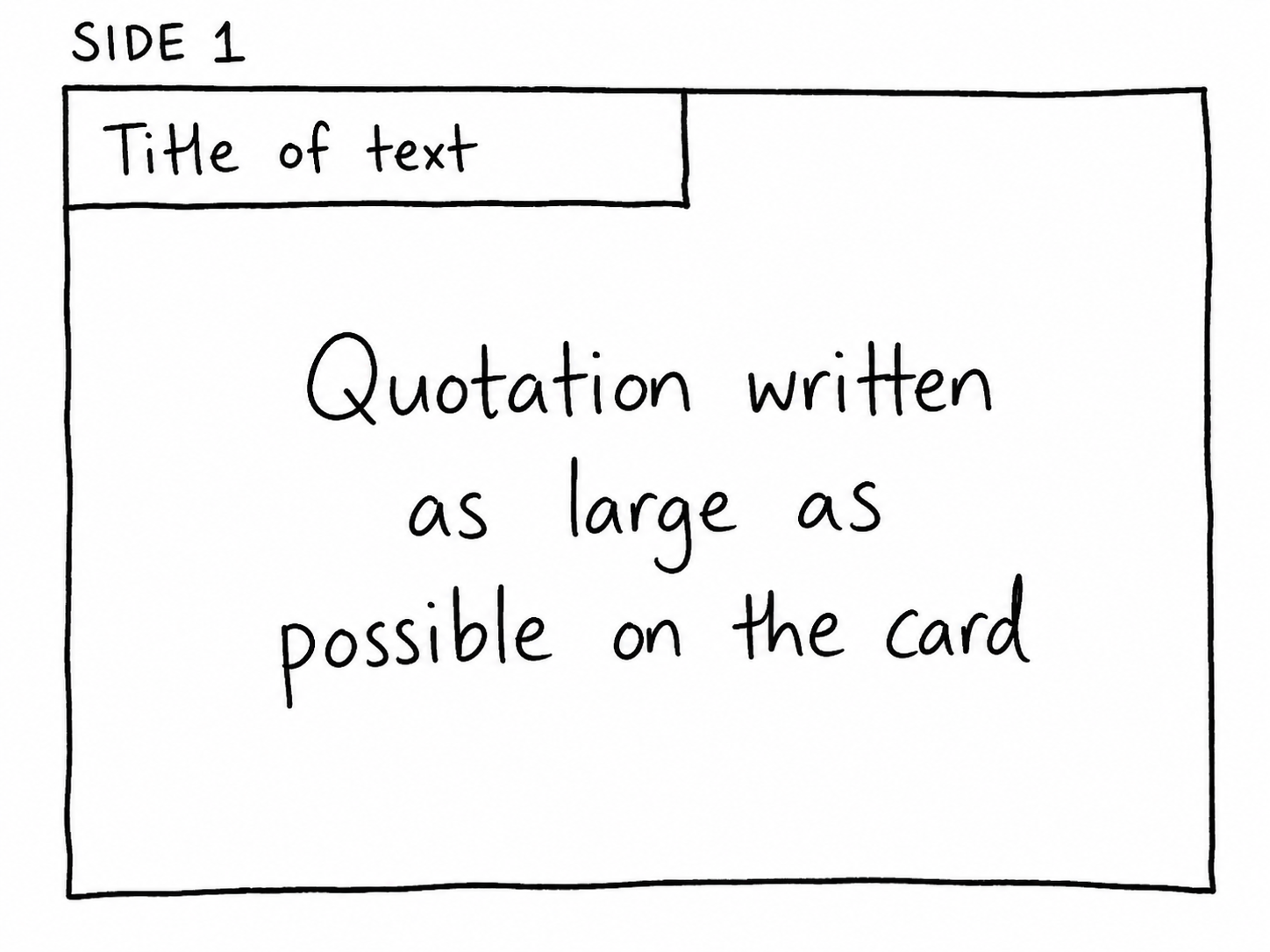
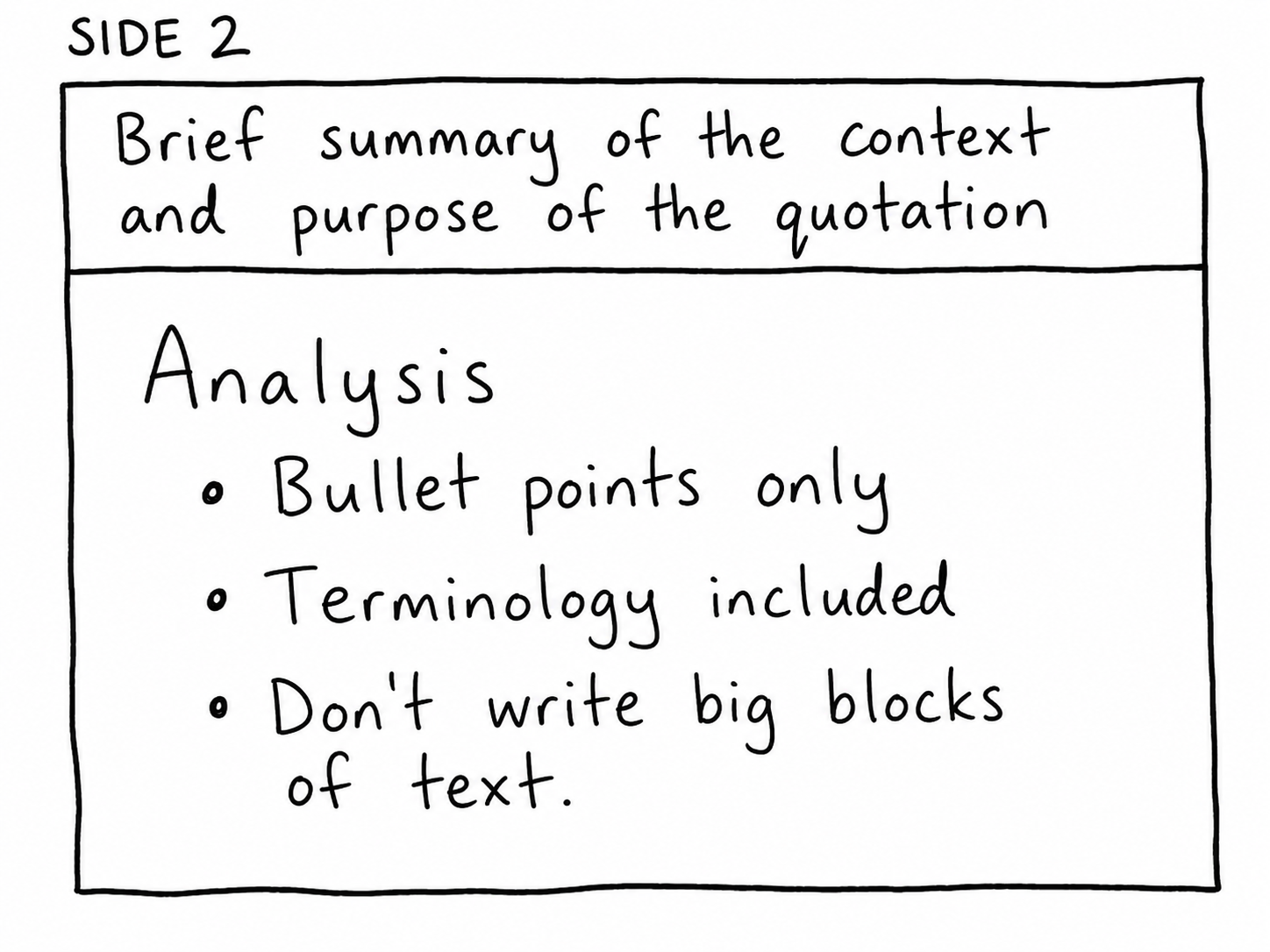
Brief notes on the design (see below for a full explanation)
Flashcards should be physical things, not digital things
They should be hand-written not typed
The content should be fairly minimal (e.g. not full sentences and detailed notes)
The content should be written as large as possible on the cards
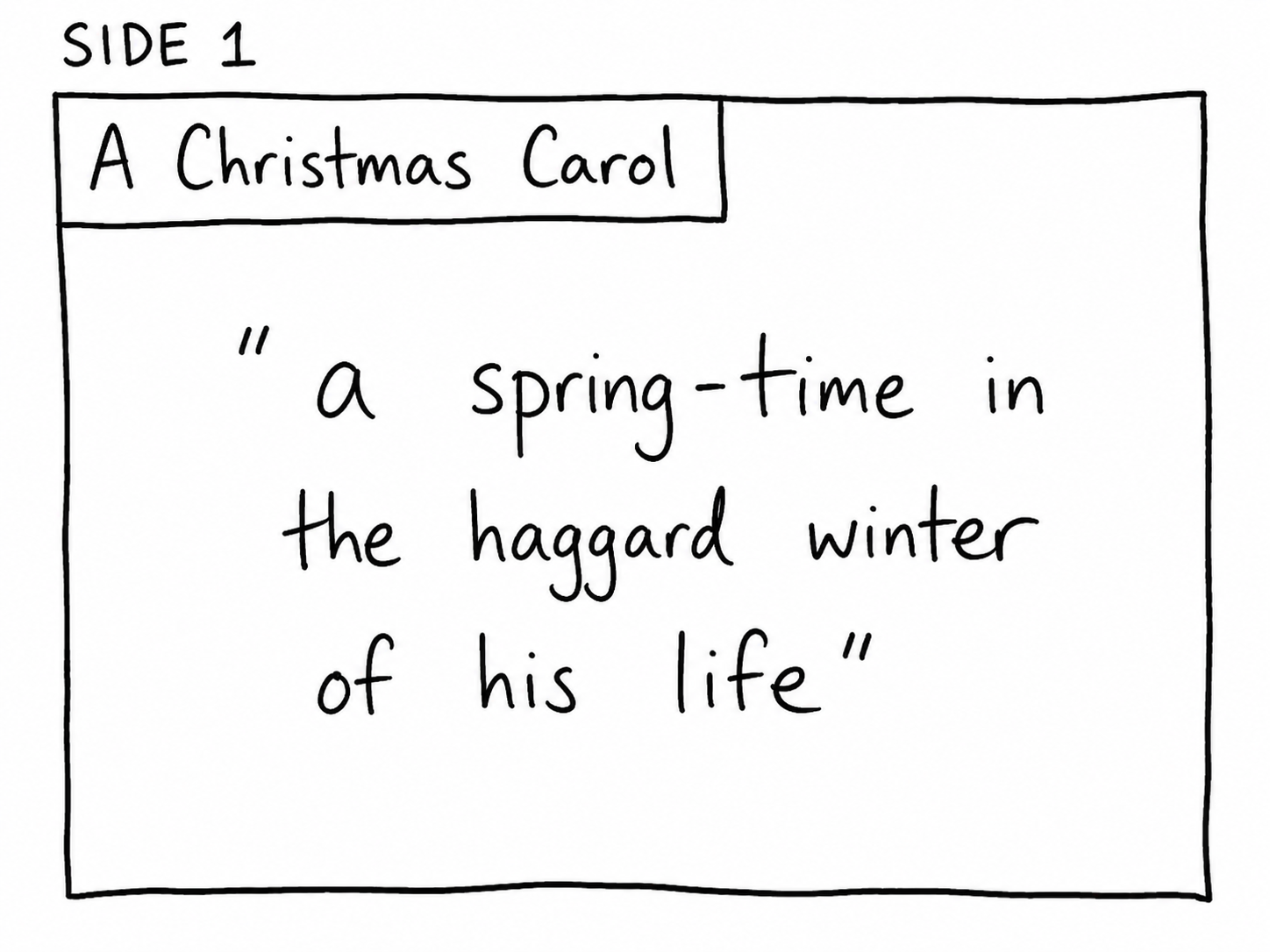
Examples of finished flashcards
Example 1
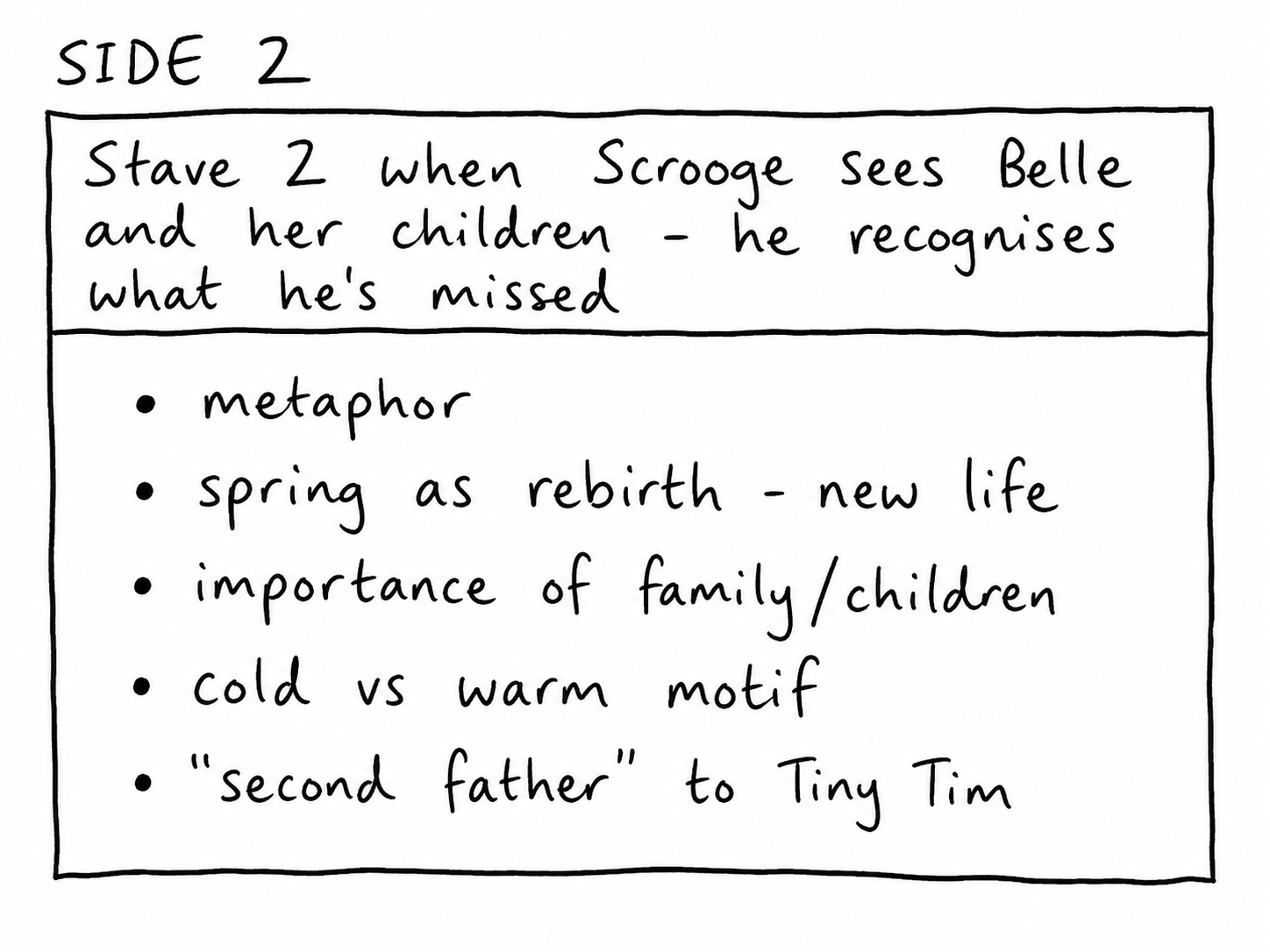
Example 2
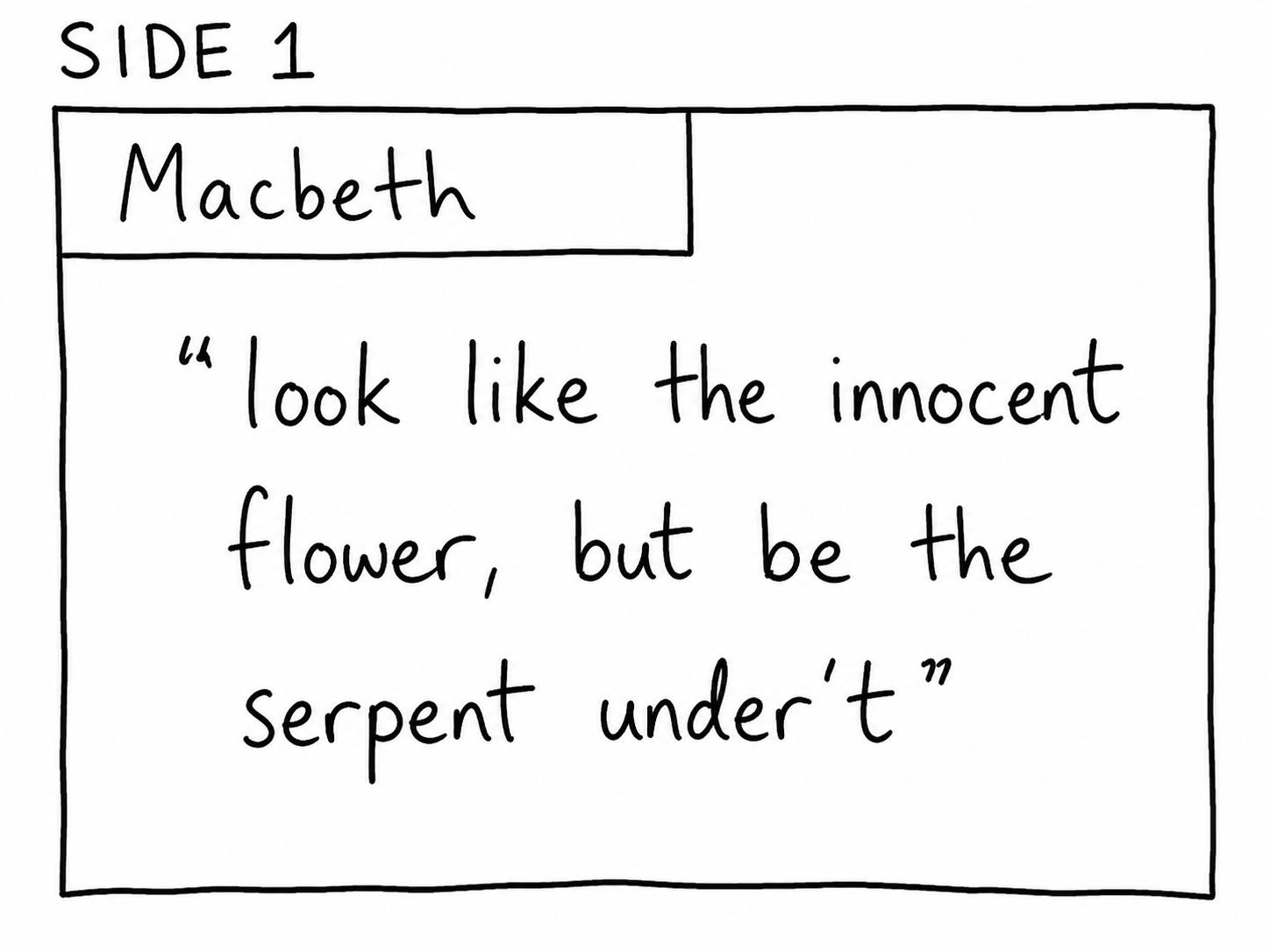
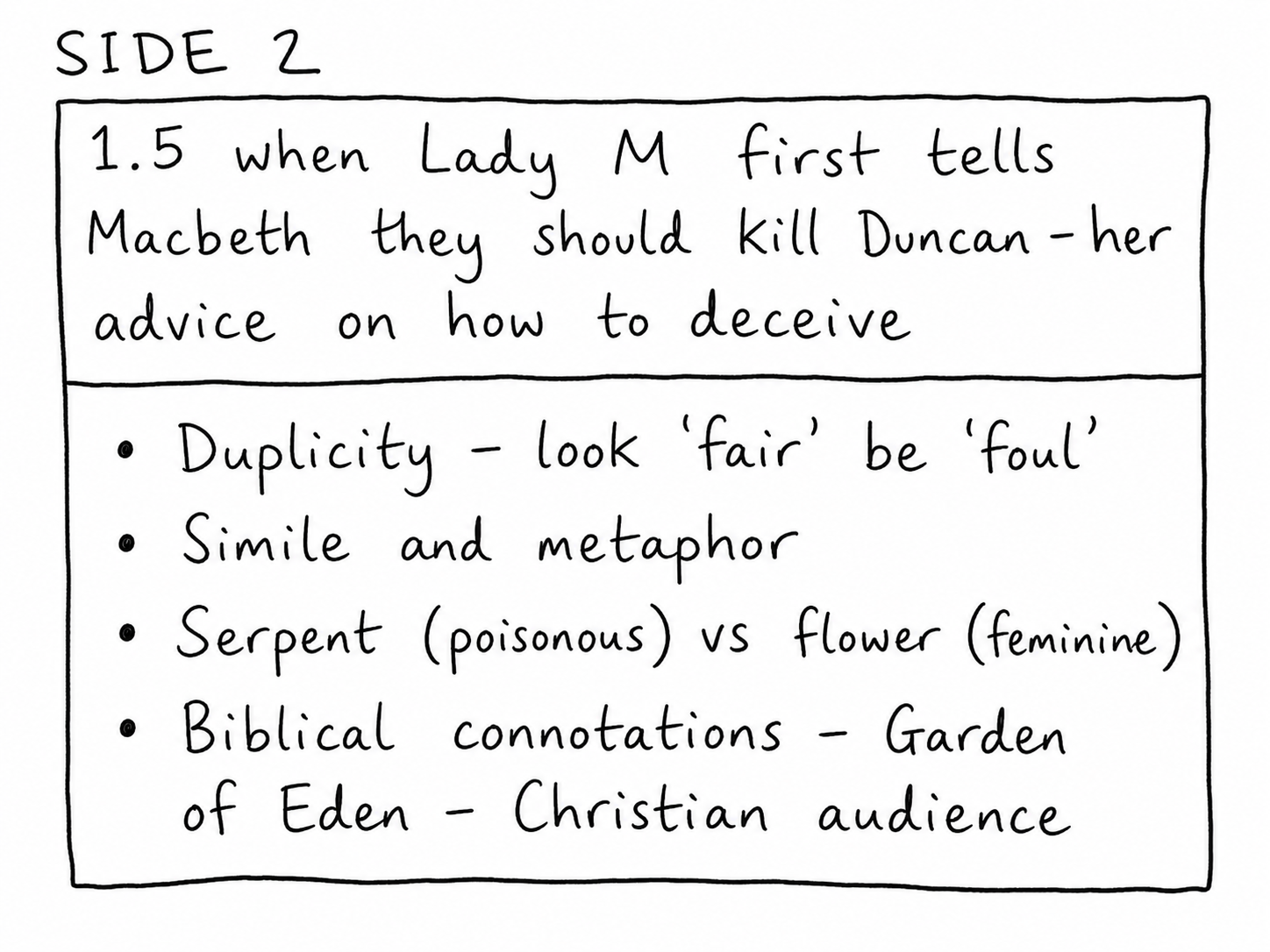
How to use flashcards — two core methods
Method 1: Side 1 face-up
Choose a random flashcard from your deck
Look at the quotation on Side 1: Can you recall the context and purpose? Can you recognise techniques in the quotation? Can you remember how to analyse the quotation?
Check Side 2: Did you get the context and purpose right? Did you get the terminology/analysis right? Can you recall the fuller versions of the analysis notes on Side 2?
Method 2: Side 2 face-up
Choose a random flashcard from your deck
Read the context and purpose at the top of Side 2: Can you recall the quotation that goes with that context and purpose?
Check Side 1: Did you get the quotation right?
Why use this flashcard design
Why physical, handwritten cards
You should be able to use your flashcards anywhere, any time, including in lessons, so you don’t want to be reliant on a digital device to access them.
You can use physical flashcards in pairs or groups to help each other revise — physical cards are far more versatile than digital ones.
The process of creating and handwriting the cards is a huge part of your revision — the creation of the flashcards is the first stage to memorising the content; if you copy and paste digital content to create digital cards, you will learn nothing.
Why brief notes on each card, not detailed ones (in tiny writing)
Flashcards are prompts to help you recall your detailed notes, which you should create separately in an earlier part of the revision process. They shouldn’t be the revision notes themselves. If you can’t remember what the flashcard notes mean, you need to go back and revise the detailed notes a bit more.
Flashcards should be readable at a glance, which means bigger not smaller writing.
Why include the context and purpose at the top of Side 2
You must learn quotations in context.
There’s no point memorising the quotation and trying to write about it in an essay if you don’t know who said it or when they said it or why the writer included those words at that point in the text.
All this information should be summarised at the top, above the analysis so you can revise it at a glance.
Why include analysis on Side 2
As well as learning the quotations themselves, you should some of the analysis that goes with them.
You will still need to be flexible based on the question you’re asked and the way you want to use each quotation in your essay, but having some idea of how it can be analysed (especially terminology and methods analysis for AO2) is very useful, especially if you struggle to do these things yourself.
You should also include historical/contextual facts for AO3, if relevant (see Example 2 above).